
black and white bed linen

Support Cuban

farming families

across the island.
WHY THIS

MATTERS NOW

The weaponization of food as a geopolitical tool for regime change has been a central feature of U.S. policy toward Cuba since the early 1960s. This strategy has recently intensified. A January 29 executive order tightening U.S. sanctions, alongside threats of tariffs against countries that supply oil to the island, is accelerating widespread hunger and malnutrition across Cuba.

UN experts have strongly condemned these measures, warning that they violate international law and will deepen the humanitarian crisis, particularly because Cuba’s health, food, and water systems depend heavily on imported fossil fuels. In response, UN agencies, several governments, and civil society organizations are mobilizing humanitarian assistance. Yet the scale and political nature of the crisis demand sustained solidarity beyond emergency aid.

Supporting Organizations

  • 350 International Solidarity Working Group

  • Another Gulf Is Possible Collaborative

  • Caribbean Agroecology Institute

  • EFERT

  • Familias Unidas por la Justicia

  • Friends of the Congo

  • Gulf of Mexico Youth Climate Summit

  • Los jardines Institute

  • Organización Boricuá de Agricultura Ecológica de Puerto Rico

  • Rural Vermont

  • Tending Futures

  • VAMOS PR

How Your Support Helps

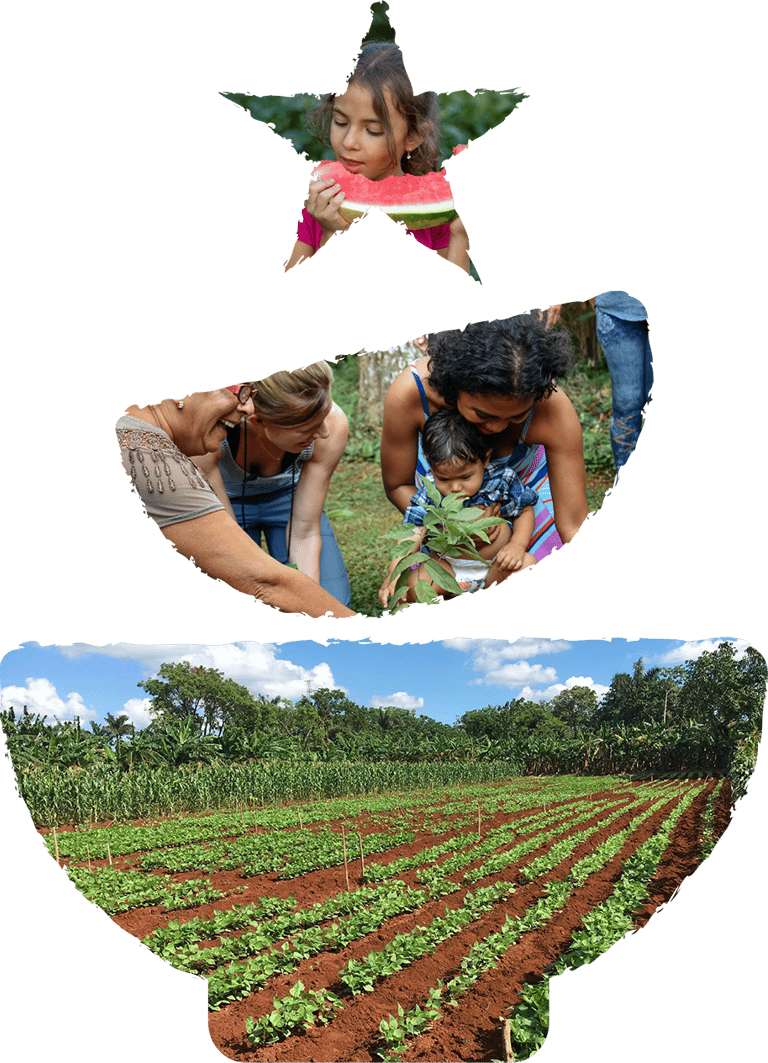
Funds raised will be used to resource and strengthen the capacity of family farmers in renewable energy and agroecological approaches to irrigate fields, power on farm equipment, locally distribute harvests, and nourish local communities and ecologies. At a moment of acute fuel scarcity, strengthening agroecological food systems is not only a matter of food access, but also of climate resilience, autonomy and survival.

Learn About Food Sovereignty in Cuba

Watch these two short videos to understand the movement, the context, and why it matters.

Food Sovereignty, Defined

“Food sovereignty is the right of peoples to healthy and culturally appropriate food produced through ecologically sound and sustainable methods, and their right to define their own food and agriculture systems. It puts the aspirations and needs of those who produce, distribute and consume food at the heart of food systems and policies rather than the demands of markets and corporations.”

Declaration of Nyéléni, 2007 Forum for Food Sovereignty in Sélingué, Mali.